
01 / COORDINATE
Keep the team connected.
Plan a shared workspace for operational leads and partner teams to review priorities and coordinate their response.
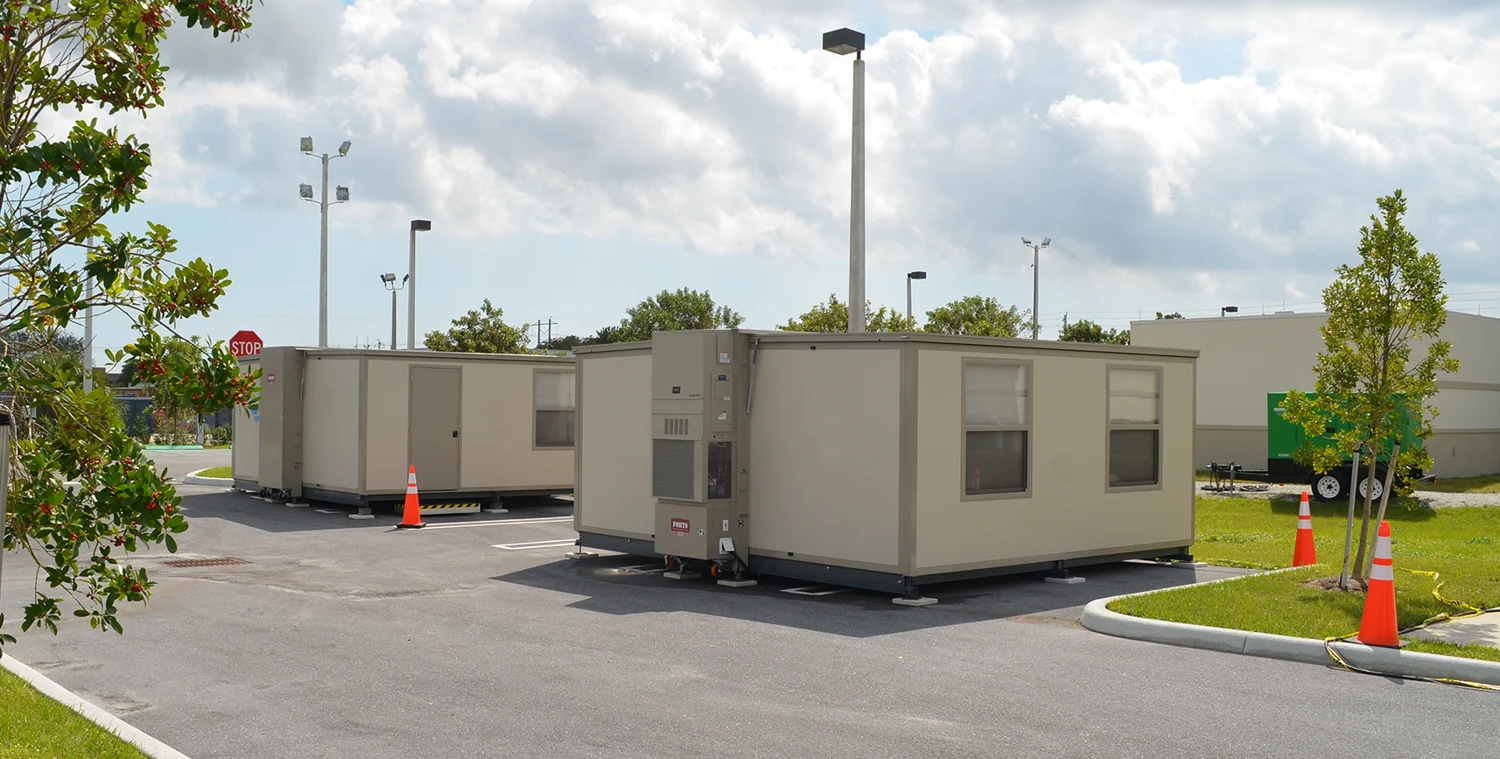
Coordinate incident response, utility operations and field teams from a dedicated workspace near the mission. FORTS Logistics plans deployable command facilities and the transportation, site setup and operating support around them.
When permanent workspace is unavailable or too far from the operation, a field command facility gives your team a defined place to coordinate people, information, and next steps.
Plan a shared workspace for operational leads and partner teams to review priorities and coordinate their response.
Discuss work areas for briefings, planning, and focused tasks around your team’s workflow.
Build site access, utilities, and sustained support into the deployment plan, alongside the facility itself.
Choose the working environment your mission needs. Layout, equipment, and supporting systems are defined together during project scoping.
Discuss workstations and meeting surfaces for a team operating from one location. Confirm circulation, storage, and equipment placement before deployment.
Explore partitions or private rooms where the chosen platform and configuration allow, so focused work can sit alongside team coordination.
Evaluate compatible connected shelters when several operational functions need a coordinated footprint. Layout and connections are project-specific.
Workstations, HVAC, power, and other systems depend on the selected package. Radios, networking, satellite, and Wi-Fi services are scoped separately; do not assume communications equipment or connectivity is included.
Final scope, availability, and suitability are confirmed for your project.
Share the location, timeline, expected duration, team requirements, and essential equipment.
Review access routes, placement, utilities, handling needs, and the approvals required for use.
Plan transport, site positioning, and agreed setup responsibilities with the equipment and support scope.
Confirm contracted support during use, then coordinate recovery and return when the operation ends.
Delivery, setup, and operational readiness are separate milestones. Timing depends on equipment availability, travel, site conditions, connections, and required checks.
Discuss the services your site needs. These are optional, separately scoped capabilities, subject to availability and project requirements.
Generator and fuel support, along with lighting for the wider work site.
Satellite, Wi-Fi, and IT support options aligned with your team’s communications requirements.
Sanitation and accommodation options for teams supporting a sustained field operation.
The agreed package determines the shelter, workstations, furniture, HVAC, power, and other equipment. Your proposal should clearly identify inclusions, optional services, and customer responsibilities.
Do not assume they are included. Discuss radios, networking, satellite, Wi-Fi, connectivity, and IT support as specific requirements. Equipment, service availability, and operational responsibilities must be confirmed.
Capacity depends on the selected platform, furniture, equipment, circulation, and applicable requirements. Share your expected team size and working pattern so the layout can be assessed.
Mobilization and readiness depend on availability, location, site preparation, transport, connections, equipment setup, and necessary checks. A shelter setup time is not a guarantee of an operational command center.
Provide your location, target start date, expected duration, team size, available site access and utilities, and required communications or support services. Identify any security, access, or approval requirements early.
Bring these details to your deployment discussion:
Need immediate support? Call 800-776-0403.
Separated work areas and compatible connected facilities can be evaluated where the chosen platform allows. Review privacy, circulation, equipment placement and team coordination together when choosing a layout.
Command workspaces, medical facilities and supporting field services are existing capabilities. A coordinated site plan should establish the footprint, access, utilities and responsibilities for each facility.
Recovery and return can be coordinated as part of the deployment scope. Identify the expected end date, shutdown responsibilities, equipment handling and destination before the operation closes.
Discuss your location, timeline, and operational requirements.