
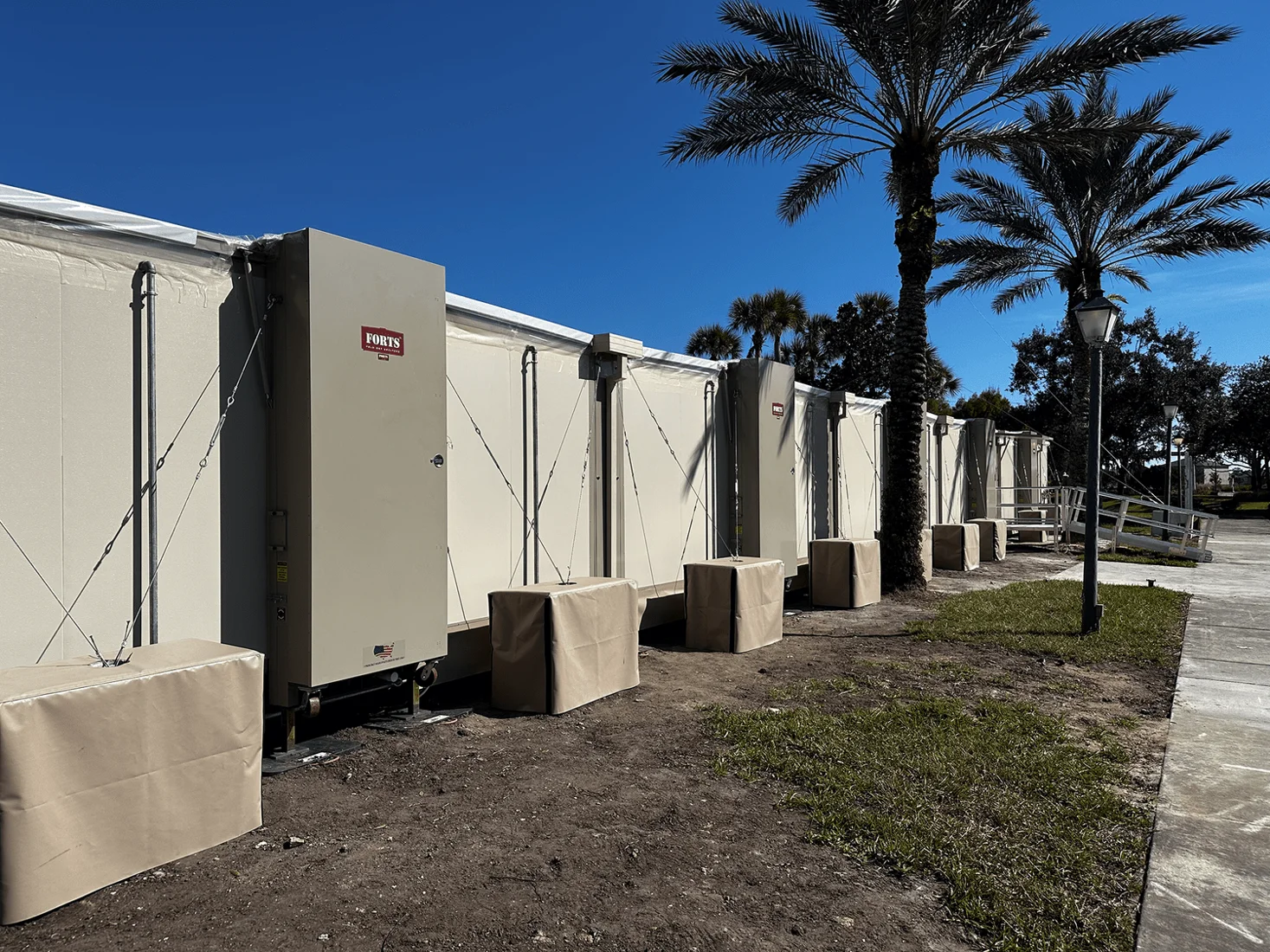
Field Detention Unit (FDU)
Secured seating, four-stall bathroom and sink, viewing windows and lockable entry.
- 900 sq. ft. across three connected units
Plan modular infrastructure around temporary holding, intake, clinical screening, medication management and staff operations. Explore six unit configurations and coordinate layout, utilities and deployment requirements for your agency’s intended use.
Compare six configurations for distinct operating functions. Review the detailed layout and specifications for each unit below.
Secured seating, four-stall bathroom and sink, viewing windows and lockable entry.
Configurable intake workstations with climate control, lighting, power and CAT6/fiber capability.
Screening, triage and clinical intake space with privacy and administrative medical workspace.
Controlled-access medication storage and dispensing with pharmaceutical refrigeration.
Workstations for administration, case management and sustained staff operations.
Negative-pressure ventilation, HEPA filtration and sealed interior surfaces.
Review the complete detention overview for facility combinations, project scoping and related support.
VIEW DETENTION OPERATIONS ↗Government agencies coordinating temporary holding, intake, clinical screening, medication management and staff operations. Layouts and operational requirements are reviewed for each project.
Bring these details to your deployment discussion:
Need immediate support? Call 800-776-0403.
The current overview describes six configurations: Field Detention, Interview & Processing, Clinical Triage, Medication Control & Distribution, Surge Staffing & Operations, and Airborne Infection Isolation units. Each has a distinct function and reference footprint.
Facility combinations can be reviewed for the project. Layout, circulation, utilities, access and operating responsibilities need to be assessed for the intended functions rather than inferred from a unit’s reference area.
No. Published areas and equipment descriptions describe the facility configuration. The responsible agency and relevant authorities must review the intended use, occupancy, operating procedures and any applicable clinical requirements.